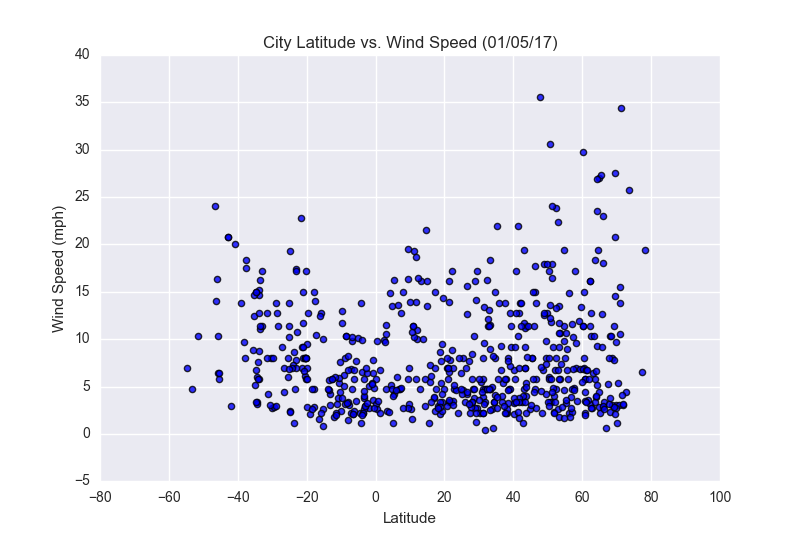
Wind Speed vs. Latitude
Wind speed is normally measured by a cup anemometer consisting of three or four cups, conical or hemispherical in shape, mounted symmetrically about a vertical spindle. The wind blowing into the cups causes the spindle to rotate.
Wind speed near the ground is much affected by such factors as the roughness of the ground and the presence of buildings, trees and other obstacles in the vicinity. This is why the standard height for surface wind observations is 10m. Wind speed increases with higher elevations above the surface because the pressure gradients tend to be greater, the density of the air is less, and the drag due to friction is much less.
Wind speed varies considerably, even using observations at a rate of 1 per second, and can vary by 10% per minute in "steady" wind. The fluctuations in wind speed have been researched carefully because of their impact on designs of things like bridges, buildings and wind turbines.
Home